A Risk to Beneficiaries That Trade Finance Rules Still Ignore
I am part of an entrepreneur group, founders of manufacturing and export businesses across textiles, coconuts, fruits, edible oils and cookware. Real businesses, real corridors, real buyers.
One of them exports coconuts and edible oils, and works with multiple buyers across the Middle East on a mix of payment terms, from open account and partial advance to Letters of Credit, including confirmed ones.
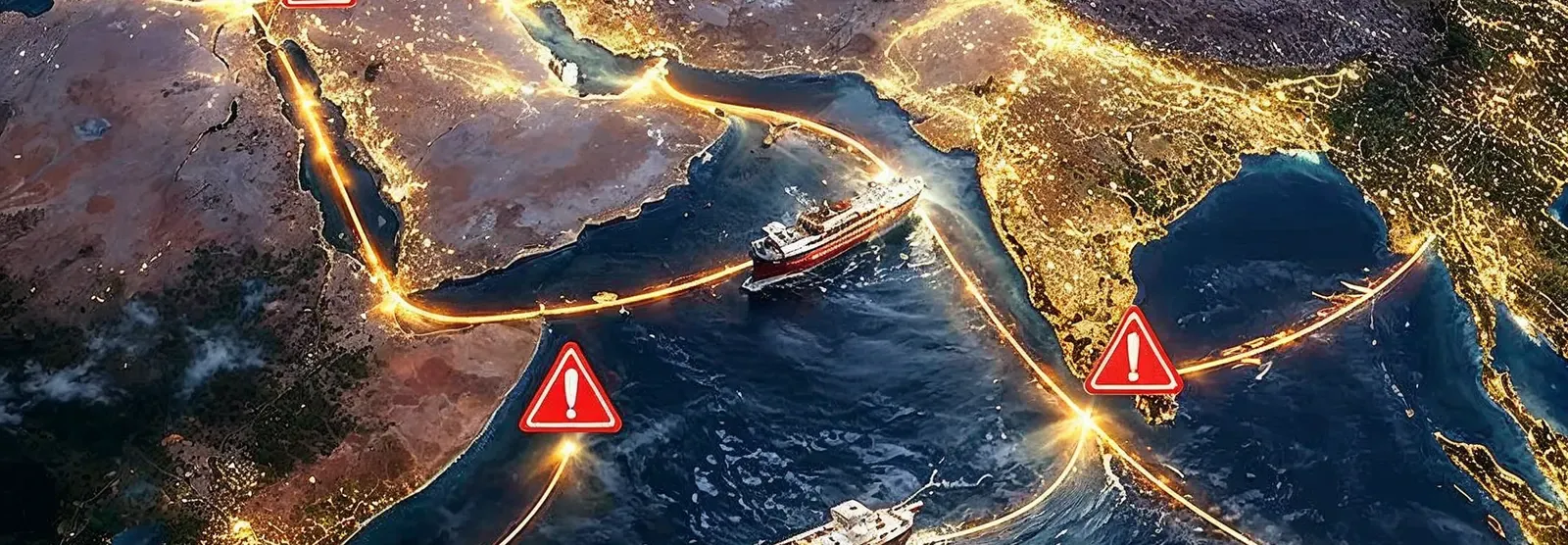
Last week, he was supposed to ship three containers. Goods were ready at the warehouse. When he called his freight forwarder to book the vessel, he was told that several major shipping lines had suspended bookings through the Strait of Hormuz due to security concerns. No vessels were accepting cargo for Persian Gulf destinations until further notice.
Two of those three containers were under a Letter of Credit confirmed by a bank in India, with a latest shipment date of 13 March.
His bank told him plainly they could not help unless he submitted compliant documents, meaning documents showing shipment on or before that date.
He called the buyer immediately, asking for an extension to the latest shipment date.
The buyer refused.
Not because the request was unreasonable.
But because the situation gave him leverage, and he used it.
The exporter called us with a question that was equal parts practical and philosophical.
“I have an LC confirmed by a bank in India. The delay wasn’t my fault. War stopped the ships. Why am I now dependent on the buyer’s goodwill to get paid?”
It is a fair question. And the answer tells us something about trade finance rules that the industry has been slow to confront.
The LC Clock Runs Even When the Sea Is Closed
In documentary trade, banks deal with documents, not physical shipment realities.
Under UCP 600, if an LC states a latest shipment date of 13 March and the exporter ships on 18 March, the bill of lading falls outside the LC terms. The presentation becomes discrepant and the bank must refuse.
It does not matter that maritime security concerns made shipment impossible. It does not matter that the buyer understands the reason. Late shipment remains a discrepancy because the rules assess documents, not circumstances.
The exporter’s only recourse then is to present discrepant documents and request that the buyer waive the discrepancy. The buyer may agree. Or, if market prices have shifted in their favour since the LC was issued, they may find it convenient not to.
At that moment, the instrument designed to remove the exporter’s dependence on the buyer effectively restores it.
Even a Confirmed LC Has Its Limits
This is where the situation becomes counterintuitive for many exporters.
A confirmed LC is widely understood, and correctly so, as the safest payment structure available in international trade. The confirming bank adds its own irrevocable undertaking to pay, independent of the issuing bank and the buyer.
It removes buyer risk, issuing bank risk and destination country risk.
But confirmation applies only to compliant presentations.
If shipment becomes impossible and the bill of lading carries a date outside the LC terms, the confirming bank will refuse the presentation just as the issuing bank would.
To correct that late shipment date, the exporter needs an LC amendment. And only the buyer can instruct the issuing bank to issue it.
The confirming bank cannot compel the buyer to request an amendment. It cannot extend the shipment deadline itself.
So the exporter who believed he had insulated himself from buyer risk suddenly finds himself waiting for the buyer’s cooperation, watching the LC deadline pass with no instrument he can enforce.
What Article 36 Actually Covers, and What It Doesn’t
At first glance, one might expect UCP 600’s force majeure clause to address such disruptions.
It does not.
Article 36 states that banks assume no liability for consequences arising from interruptions to their own business caused by events such as war, riots or natural disasters.
The key phrase here is interruption of the bank’s business.
Article 36 protects banks when banks cannot operate. It does not address situations where banks are functioning normally but shipment has become impossible.
In the current Gulf scenario:
- The issuing bank is open
- The confirming bank is open
- The LC deadlines remain unchanged
What has changed is the physical reality the documents represent: vessels that are not sailing and corridors that are temporarily closed.
So UCP protects banks when banks cannot function.
It offers no corresponding protection when exporters cannot ship.
A Gap That Has Been Visible for Years
This problem is not unique to the Strait of Hormuz.
Similar situations have appeared repeatedly in recent years:
- Pandemic-era port shutdowns in 2020–2021
- The Ever Given blockage of the Suez Canal in 2021
- The closure of Black Sea corridors after the Ukraine war in 2022
- Red Sea shipping disruptions in 2023–2024
Each time, exporters faced the same issue: the shipment date in the LC reflected the world when the credit was issued. The world changed. The LC did not.
The industry response has usually been informal, handled through case-by-case extensions, buyer negotiations, or discretionary flexibility.
But the structural rule has remained the same.
UCP 600 was last revised in 2007. At the time, recurring disruptions to major shipping corridors were far less frequent.
That raises a legitimate question today: whether the framework needs a mechanism for situations where shipment becomes verifiably impossible due to events beyond the beneficiary’s control.
Such a mechanism could, for example, allow automatic extensions triggered by recognised disruptions to specific corridors, defined objectively through shipping advisories, P&I club notifications or government navigation warnings.
Whether the ICC Banking Commission is prepared to consider such a provision is another matter. But the case for discussing it is becoming harder to ignore.
Venzo Perspective
We have worked with banks and exporters on trade finance operations for nearly two decades. Calls like the one we received last week are not unusual.
What stays with us is the simplicity of the situation.
An exporter did everything right. He chose the safest payment structure available. He obtained a confirmed LC. He prepared the shipment and documents. And then a geopolitical event beyond his control made shipment impossible.
The instrument meant to remove buyer discretion now requires the buyer’s full cooperation to function.
The banks are not acting wrongly. They are applying the rules as written. The confirming bank refuses a discrepant presentation because that is exactly what UCP 600 requires.
The issue lies in the framework itself.
Documentary trade finance works because the rules are objective and consistent. The ICC has always been cautious about introducing force majeure concepts that could invite subjective disputes into a documentary system.
But there is a difference between subjectivity and verifiable disruption.
A suspension of shipping through a named corridor, confirmed by multiple carriers and maritime advisories, is not a commercial dispute between two parties. It is a documented event affecting every exporter on that route simultaneously.
A rule that recognises such events would not undermine documentary discipline. It would simply acknowledge a reality the original drafters did not anticipate.
The ICC Banking Commission last revised UCP in 2007. The trade environment of 2026, with increasingly fragile shipping corridors and recurring geopolitical disruptions, is very different.
At some point, the rules will need to reflect that.
Until then, exporters like my colleague will continue finding themselves in the same position.
The goods are ready. The buyer is there. The only thing missing is a rule that recognises what everyone already knows: that war stopped the ships, and the exporter should not be the one who pays for it.